

Bite-Size Chunks of Wisdom

Strategy & Planning

Recent Posts

Two business colleagues reviewing notes together at a table, one pointing out a detail to the other

Waiting for the economy to stabilize before you grow isn’t caution, it’s the single most common reason a $250K–$4M service-based business stays stuck. Have you ever noticed that things never actually stabilize on a schedule? The businesses that accelerate growth in uncertain times make three specific moves regardless of what the news is saying: they get outside eyes on the stall, fix the one bottleneck that’s actually causing the issue, and set a real deadline instead of a vague intention. None of that requires the economy to cooperate first. (Can I get a Hallelujah?)

Every owner I’ve worked with has said some version of it: once things settle down, I’ll focus on growth. In 25+ years of doing this work, across multiple real downturns (not just the steady years), I’ve never seen the economy actually settle down on cue. Waiting for stability is waiting for a time that doesn’t ever arrive.

What stalls growth almost always turns out to be a bottleneck inside the business. Uncertainty just makes it easier to hide behind. If you’ve felt this without naming it, Entrepreneurs: Balancing Uncertainty and Complexity digs into that dynamic further.

The thing that’s creating a stall is usually obvious to someone who isn’t us. That can be a tough pill to swallow since we pride ourselves in knowing our business better than anyone else. One client put it this way: “I was too close to see my own situation objectively.” That’s the whole gap, in their own words. We’re inside the day-to-day of the business we built, so the distance between what we’re doing and what’s actually working stops being visible to us.

An outside, strategic view doesn’t tell you anything you couldn’t have figured out eventually. It just tells you now, instead of eighteen months from now. That’s a real game-changer for turning growth around.

  1. Get an outside read on where you’re actually stuck. Someone who can see the business without your blind spots. (Warning: a friend’s opinion or a gut check you’ve already talked yourself out of won’t do it.) Most owners already suspect the answer. They need someone to confirm it and give them permission to act on it. This is huge!
  2. Fix the one bottleneck that’s actually foundational, not the one that’s loudest. Uncertain economies make it tempting to fix everything at once. Pick the single constraint that’s genuinely holding growth back and leave the rest alone for now.
  3. Set an actual date to implement your plan. “When things pick up” isn’t a plan. Pick a month, a week, and a day. Tell someone. A deadline with no one watching makes it much too easy to let slide.

I’ve watched businesses grow through good years and bad, and the pattern holds: the businesses that wait for certainty before acting are not growing at the same rate as their colleagues who implement their growth decisions. The ones that grew did it in the same uncertain conditions while everyone else sat out waiting for economic certainty to return.

The economy isn’t something you control. A bottleneck inside your own business is. That’s the whole case for timing growth decisions around the second thing, not the first. This is exactly the pattern covered in What No One Tells An Entrepreneur About Breaking Through a Business Plateau.

If your business has been flat for a while, it’s worth asking honestly: is it actually the economy, or is it a stall you’ve been in for a while and are attributing to the economy? Most of the time it’s the second one.

If that sounds familiar, the Messy Middle below breaks down what’s usually going on underneath a stall.

How do I accelerate business growth without more funding?
Growth stalls are generally a bottleneck problem, not a capital problem. Most of the time, the fastest path forward is fixing the one constraint that’s actually holding things back, not raising more money to grow around it.

Is it normal for a small business to stall during uncertain economic times?
Yes, and it’s rarely the economy itself causing the stall. Uncertainty just makes it easier to point at something outside the business instead of calling out the internal bottleneck.

What’s the fastest way to figure out what’s actually stalling my growth?
Get someone outside the business to look at it directly. Owners are often too close to their own situation to see the gap objectively. That’s not a failure, it’s just how being inside your own business works.


Do you see yourself as a strategic genius? Think again. Only three out of ten small business owners truly grasp strategic skills. This implies that many entrepreneurs could miss crucial growth and scaling opportunities.

Surprised? Don’t be!

Strategic Thinking Skills for Small Business

Developing strategic skills is a challenge for many small business owners. The constant juggling of daily operations, customer service, and financial management often leaves little time for long-term planning and strategic thinking. This lack of time and focus ultimately hinders growth and innovation.

Enhancing your strategic skills, however, opens up a world of possibilities, such as:

  • Identifying emerging trends to strengthen your business and stay ahead.
  • Establishing a clear direction with a well-developed roadmap to align everyone towards the same outcome.
  • Making smart business decisions based on sound principles to navigate challenges effectively.
  • Allocating resources wisely ensures time, money, and effort are directed where they have the most impact.
  • Improving marketplace positioning for easier growth and sustainable success.

Ready to see how strategic you really are? Rick Horwath, best-selling author on strategy, has created a quick quiz to test your vital skills. Are you up for the challenge? (Answers are below—no peeking!)

How Are Your Strategic Skills?

  1. At the heart of the business strategy is:
    1. The intelligent allocation of limited resources.
    2. Distributing resources across all potential growth opportunities.
    3. Working to be better and faster than the competition.
  2. Successful business strategy is about:
    1. Being better than the competition.
    2. Having the “right people on the bus.”
    3. Providing differentiated value to customers.
  3. The three disciplines of strategy are:
    1. People, strategy, and process.
    2. Customer focus, service, and product leadership.
    3. Acumen, allocation, and action.
  4. An objective is:
    1. The current purpose of the organization.
    2. The general outcome you’re trying to achieve.
    3. The specific outcome you’re trying to achieve.
  5. A goal is:
    1. The specific outcome you’re trying to achieve.
    2. The future purpose of the organization.
    3. The general outcome you’re trying to achieve.
  6. Goals and objectives represent:
    1. How you will achieve your mission and vision.
    2. What you are trying to achieve.
    3. The tactical means of achieving business success.
  7. Strategy and tactics represent:
    1. How you will achieve your goals and objectives.
    2. Long and short-term goals.
    3. A balanced scorecard indicating business performance.
  8. Strategic thinking can be defined as:
    1. The annual process for creating a strategic plan.
    2. The ability to generate business insights continually.
    3. Using SWOT Analysis to identify opportunities and threats.
  9. An effective strategy depends as much on:
    1. Tactics as it does goals and objectives.
    2. The economy as it does on your core competencies.
    3. What you choose not to do as it does on what you choose to do.
  10. Good strategy requires managers to:
    1. Not be all things to all people.
    2. Serve as many customers as possible.
    3. Develop an exit strategy for the business.

So, how did you do? (Answers at the end)

Ready to Achieve More?

Being strategic involves consequences. It means achieving what you’ve never achieved before. It involves careful planning, foresight, and a deep understanding of your goals and resources. And it most often involves giving something up to obtain something better.

Take these insights to heart and transform how you approach your business strategy. By doing so, you can identify new opportunities, mitigate risks, and ensure sustainable growth for your organization. 

(Answers: 1A – 2C – 3C – 4B – 5A – 6B – 7A – 8B – 9C – 10A)

Business Growth

Business Growth Ask any entrepreneur about their annual business planning, and you’ll likely see an eye roll. It’s a task most of us would rather avoid, yet it is one of the most critical steps in setting the stage for your business growth in the coming year.

Although it may seem a bit premature to plan for 2025, it’s actually the perfect time to start laying the groundwork to ensure the year doesn’t slip away again. By establishing a clear direction now, you can avoid the last-minute scramble and undue stress that often accompanies spontaneous planning.

Let’s all agree that planning on the fly is much too stressful. Taking the time to strategize now will pave the way for a smoother and more successful year.

A Big Deal Vs. a Big Ordeal

Whatever you do, avoid making it a big ordeal. When a task feels daunting, it’s easy to procrastinate. This often happens when we overthink or exaggerate the complexity of the task at hand. And we all know what happens when we delay action—missed opportunities, hindered growth, and increased stress. By breaking tasks down into smaller, manageable steps, we can tackle them more effectively and maintain steady progress toward our goals.

Here is a simple step-by-step plan you can implement now to ensure your end-of-year assessment and planning is a big deal, not a big ordeal:

Step 1: Set Your Intention

Just like getting ready for a Thanksgiving trip to Grandma’s provides a clear framework, setting a well-defined objective empowers you to achieve your desired outcome. Ask yourself what you want to accomplish with your planning session.

Step 2: Schedule Planning Time and Location

Talking about planning doesn’t get it done. Blocking time on your calendar increases the likelihood of it happening—especially if you treat it with the same respect as any important meeting. For an uninterrupted, undisturbed experience, consider finding a quiet place like a nice Airbnb away from the office — and include your business strategist.

Step 3: Pack Your Bags

With your intention set, gather all the necessary information you need for your assessment and planning time. This could include financial reports detailing revenue and expenses, customer feedback providing insights into satisfaction and areas for improvement, a market analysis of industry trends and competitor activities, and more.

Step 4: Dig In

This part can be easier said than done, yet it’s not impossible. Don’t let procrastination or indecision slow you down or stop you from doing your best work and playing a bigger game. Stay organized and focused, plan out your tasks carefully, and set clear goals to keep you on track. A structured approach and dedication help you overcome challenges and achieve your objectives.

Final Points to Consider

  • Stay Objective: Remain as objective as possible during the assessment phase to ensure you’re evaluating your business results accurately
  • Plan Flexibly: Avoid too much detailed planning for the third and fourth quarters of the year. Business evolves quickly, and you want to remain agile.

Although you may have to pinch your nose to get through your business appraisal, your ability to think clearly and act boldly in the new year makes it worthwhile.

Ready to Grow: Key Takeaways

Planning for the future, especially in the messy middle of business growth, is crucial for setting the stage for success. By taking the time to assess and plan, you protect your time and ensure a strategic approach to the year ahead.

___

Ready to transform your business planning into a powerful tool for growth? Book a call with our expert Business Strategist today, and we’ll help you refine your strategy and prepare for the next level of your business.

strategic thinking for business growth

What do wise entrepreneurs do when their business growth begins to slow? Most either work harder or throw money at the perceived problem—or both! Neither of these options is advisable—or desirable—until you apply some strategic thinking to your business strategy and operations.

strategic thinking for business growth

Consider a recent strategic conversation with “Katherine” (not her real name for the sake of confidentiality), which perfectly illustrates how strategic thinking can shape business success. Katherine had already invested a lion’s share of time and money into her growth initiative. As results failed to materialize, her initial frustration turned to irritation. Finally, in total exasperation, she decided to move forward with a project requiring a substantial investment of resources in the hope that it would be “the thing” that fueled her small business growth.

Her situation sounds only too familiar, doesn’t it? As entrepreneurs, we’ve all experienced the same frustration when results fail to materialize despite our best efforts.

What Strategic Thinking Can Do For You

Before proceeding with her plan, we decided to put strategic thinking to the test. We examined her performance metrics to glean whatever insight was available. For many small business entrepreneurs, looking at performance metrics is like partaking in a Rorschach test. We know it’s supposed to mean something, but it all looks like a bunch of undefined, incoherent inkblots.

What we discovered—in a word—was hopeful!

Using our best investigative skills, we poked, prodded, and analyzed her performance metrics. We compared them to industry benchmarks. We aligned them with her growth goals and business strategy.

Ultimately, our strategic thinking skills cracked her performance metrics wide open. We identified a set of actions Katherine could take immediately to boost her business growth —before making another substantial investment.

Isn’t that exciting? Time will tell how Katherine’s actions will ultimately shape the trajectory of her business growth. Until then, she won’t have to grow her business in the dark with fingers crossed, hoping for success. She now has strategic actions to guide her.

The Power of Strategic Thinking

This experience underscores the transformative power of strategic thinking. You can uncover insights that save time and money by taking a step back, analyzing available data, and aligning actions with strategy and goals. It’s about working smarter, not harder.

So, how willing are you to apply strategic thinking, knowing it could shape your business success and save you time and treasure? Strategic thinking involves assessing your goals, understanding the market, and planning the most effective ways to achieve your objectives, using data to guide your decision-making.

Doing so allows you to navigate challenges more effectively and capitalize on opportunities. Remember, strategic thinking is the way forward if you’re ready to see tangible results and elevate your business to the next level.

Take the First Step Today

Strategic thinking isn’t just a buzzword—it’s a crucial tool for navigating the complexities of running a small business. By adopting a strategic mindset, you give yourself a roadmap to success.

Are you ready to transform your business with strategic thinking? The time to start is now.

If forming meaningful, growth-driven partnerships sounds like the next step for your business, we’re here to help. Contact us to explore how we can support your efforts.

grow your business with precision

As an entrepreneur with an annual revenue of $350,000–$500,000, you are in a great position to grow your business more quickly. Numerous opportunities await you. However, growth at this level requires precision and priority. The challenge is often about selecting the best opportunity to leverage for growth, which requires clarity, focus, and strategies to generate the most impact on your business. 

During the early days of your startup, it might have been easier, albeit chaotic and stressful, to venture down multiple paths. However, as your enterprise expands, it becomes more complex and uncertain. This marks the point where the real work of growing your business truly begins.

A change in mindset is beneficial to reduce the overwhelming chaos and stress and experience continuous growth with ease and grace. The actions that brought you to your current position are not necessarily the same ones that will continue to propel you forward. 

grow your business with precision

Photo by LUM3N on Unsplash

Strategize With the End in Mind

Since you’re moving forward, why not have some clarity about the destination you intend to reach? It makes choosing the correct route much more apparent. 

Consider your personal objectives since your business is often a tool for achieving them. Business, by itself, is not the complete end game.  End game options may look like selling the business for $X, retiring at the age of 45 with an annual income of $X, working fewer hours, traveling the world while you still can, owning an ocean and a mountain home, or being more available for those little people in your orbit. Whatever you choose is yours to hold and shape your business direction and decisions. 

What happens if you’re not clear on the end game? Fret not. Go as far as you can see, and when you get there, you’ll be able to see further. 

Plus, don’t waste time on detailed long-term planning. For now, you want a framework for your end game. With the rapid pace of change in business, keep more detailed planning to one year with a moderate amount of framework for years 1–5. 

Know Your Numbers 

Gut intuition and hunches are powerful tools, although most strategists would pooh-pooh the idea (Me? I’m not like most strategists.) Even so, it’s beneficial to have the best of our gut feelings backed up by solid data. 

Data guides our decision-making. It doesn’t lie. It always speaks truth to power even when you don’t like what it’s telling you. And, when you base your decisions on data rather than what you read on Linkedin as a solution, you’ll never go wrong.  

When I was in sales, I optimistically shared my goals with a trusted friend, which she immediately pooh-poohed. She wasn’t wrong. The notion of what I intended to accomplish was a bit “pie in the sky”—until I began to look at the numbers. I used data to guide my decisions. Within nine months of that honest interchange, I achieved what I intended. Numbers matter. 

What data does one collect? That’s an excellent question. With technological advancements, one can drown in data, so selecting the critical numbers is essential. These metrics could include revenue, profit margin, realization rate, customer acquisition costs, social media impressions, website visitors, or something entirely different. 

Again, your business and its destination are unique to you. The data or metrics you track should be as well. 

Hire Top Talent

Oh, this is a big one. Often, as small business entrepreneurs, our budgets are limited. Consequently, we look for the best talent we can hire for our budget. That makes complete sense unless you want to grow your business more quickly and with greater precision. Hiring top talent is a priority. 

One of my clients recently learned that valuable lesson when hiring a “junior” technician due to budget concerns. After months and months of training, the employee was still struggling to keep up. This was followed by more training and further coaching, adding extra costs. 

All of this additional time and the subsequent cost to “train up” a lesser qualified or experienced individual really adds up—especially when it’s your time as the owner. 

This wasn’t the end of the story, however. The employee ultimately made critical mistakes, resulting in client loss. It happens, right? Even though the disciplinary action didn’t result in termination, the employee stopped showing up for work. Egads! 

It was an incredible learning experience. Although the idea of training up talent is enticing, it adds unexpected costs and isn’t so budget-friendly after all. Plus, it slows down business growth. There’s a huge and hidden cost involved in hiring lesser talent. 

My advice (and that of many of my clients in the Messy Middle) is to stretch yourself and hire the best you can. 

Focus on High-Impact, High-Value Tasks

One of the most common missteps we often fall victim to is the tendency to take on every task ourselves. With the myriad responsibilities of running a business, it’s easy to get overwhelmed. As the CEO, it becomes crucial to hone in on the tasks that can significantly impact your business growth and success.

When it comes to prioritizing tasks, focus on those that have the potential to generate substantial revenue, minimize costs, or enhance overall efficiency. By identifying and prioritizing these high-impact tasks, you can allocate your precious time and energy in ways that create tangible value for your business.

Additionally, it’s essential to recognize that not every task needs to be managed by you. Delegation and outsourcing can be crucial in streamlining your workload and optimizing productivity. Handing off assignments to others allows you to free up your valuable time and attention for those critical, high-impact duties that truly demand your expertise. And, when you’ve hired top talent (see above), you will spend less time managing their work. 

Achieving business growth demands a disciplined and systematic approach and an unwavering focus on priority tasks and strategies. You can confidently drive business growth by beginning with the end in mind, prioritizing high-impact tasks, investing in top talent, and implementing precise metrics. 

Sustained growth takes time and consistent, purposeful actions to deliver remarkable results.

________

Growing your business is not about doing more; it’s about doing it smarter. That’s where precision and priority—and Synnovatia—come into play. Schedule your first free consultation today.

planning

As an entrepreneur, you likely have a long list of goals and objectives you want to achieve for your business. However, turning those goals into actionable and achievable plans can be challenging. Establishing goals and developing the corresponding tasks is one of the most essential components of planning for overall business growth — and probably the most daunting. Without it, however, measuring success, setting deadlines, prioritizing objectives, or even starting a project is challenging.

At Synnovatia, we see first-hand the importance of effective goal-setting is critical to achieving success.

planning
Key Difference: Smart Goals Vs. Tasks

When it comes to goal-setting, using SMART goals and tasks are two common approaches most entrepreneurs use to stay focused. Both are effective methods of planning and executing your objectives but have different purposes and structures. Knowing when to use which tool can make the difference in getting the results you want faster.

SMART goals are specific, measurable, achievable, relevant, and time-bound. They help you identify your priorities and create a detailed plan to achieve them. SMART goals typically define long-term objectives, such as business growth, revenue increase, or percentage of market share. For example, if your goal is to increase sales by 20% this year, having a detailed implementation plan supports its achievement.

A pivotal point to remember when establishing SMART goals is to stay within achievability. You and your team will remain motivated and committed to completing them successfully. In fact, some of Synnovatia’s clients will often set three tiers of target goals. A red target indicates achievements are less than the previous measuring period. A yellow target goal meets the achievements of the previous measuring period. And, a green target goal exceeds the achievements of the previous period. Most have found this method advantageous following the post-COVID boom era when their industry still finds its legs for normality.

On the other hand, tasks are minor, specific, and detailed activities created to support the achievement of your SMART goals. Think of them as building blocks for your more extensive goal-setting process. Tasks are usually shorter and completed in hours or days. The greater the detail, the easier it is to find the clarity and focus that makes tasks effortless (almost) to implement. For instance, if your SMART goal is to increase sales by 20%, then weekly tasks may include designing new marketing materials or scheduling outbound emails.

Detailed tasks usually don’t stop there, although most of us get-er-done entrepreneurs do. The lack of detail often derails the best of intentions. To illustrate, designing new marketing materials likely requires 4-5 finer tasks before checking it off our list as complete.  Additional tasks such as contacting the marketing department, outlining the desired outcome, or determining the budget may be required, along with an estimated completion time.

When broken down into smaller tangible steps with clear deadlines, it’s much easier to manage your tasks proactively rather than reactively to ensure progress.

Plan Smarter: Weekly, Monthly, and Quarterly Planning Tips

Weekly, monthly, and quarterly planning are critical to effective goal achievement. It’s not enough to be good at goal setting…you and your team must become masters of implementation as well.

Weekly planning allows you to set tasks and goals for the upcoming week, ensuring everyone is on the same page and working towards the same objectives. Communication of objectives, desired outcomes, and timelines is essential.

Monthly planning allows you to assess progress towards larger goals and adjust tasks accordingly. And, here’s the good news — if you and your team gain full command of the weekly planning process, the degree to which adjustments in monthly planning are required is significantly reduced.

Quarterly planning helps you evaluate progress toward longer-term goals and identify areas where adjustments may be necessary. Additionally, it’s the ideal time to reflect on accomplishments for the quarter and learning that can be carried forward into the next quarter.

Tracking progress along the continuum of weekly, monthly, and quarterly planning progress is vital to identify areas where intervention may be needed quickly. Corrective measures taken sooner rather than later save precious resources! Regularly reviewing and adjusting tasks based on progress keeps everyone on track and ensures that progress is steady toward achieving your ultimate objective.

*******

If you’re struggling to set smart goals and tasks for your business, don’t hesitate to contact us for assistance. We’ll partner with you to share our expertise and knowledge specific to your planning needs. We’ll help you identify areas for improvement, set realistic goals, and stay on track to achieve them. Don’t let hurdles to planning hold you back from reaching your goals. 

planning

Planning is key to growing any business. It helps organizations set clear goals, identify the resources needed to achieve them, measure progress, and adapt quickly to unexpected challenges or opportunities in the marketplace.

But when a small business owner launches their enterprise, planning is often ad-hoc and focused primarily on surviving day-to-day. This is especially true for those bootstrapping as opposed to those with funding.

However, ad hoc planning only takes an organization so far before it collapses into chaos. Once an organization reaches “the messy middle,” planning requirements change. At this point, the entrepreneur needs to consider several types of planning that allow the business to stay one step ahead of the industry.

planning

Photo by Jason Goodman on Unsplash

Let’s dive into the different types of planning:

Strategic planning is the highest-level planning that occurs within an enterprise. It’s the process that involves analyzing the internal and external environments, identifying the critical areas of focus, determining long-term goals and objectives, and the strategies, resources, and actions required to achieve them. Strategic planning — and the accompanying skill of strategic thinking — is beneficial in identifying opportunities and threats in your external environment and aligning your internal resources and capabilities to exploit them. A well-planned and executed strategic plan helps build a sustainable competitive advantage and achieve long-term growth.

Business planning is a process that helps organizations define their short and medium-term goals and identify the resources required to achieve them. Unlike strategic planning, a high-level process, business planning focuses on specific operational areas such as marketing, sales, operations, and finance. It typically covers a one-to-three-year period and involves setting clear targets and milestones to measure progress. The duration of short and medium-term goals can be relative to the organization’s needs, including how rapidly the business is growing and the industry is changing or the impact of outside forces (think COVID or economic uncertainty).

Operational planning focuses on the day-to-day activities of your business. It involves defining specific actions required to achieve business objectives and allocating resources to execute them. Operational planning typically covers a shorter time frame than strategic or business planning, such as a month or a quarter. To develop your operational plan, identify the specific actions required to achieve your goals. You’ll also want to identify the resources needed to execute these actions, such as personnel, equipment, and technology. Next, allocate resources and set specific timelines and milestones to measure progress. And remember, automation can be your best friend in setting up repeatable processes to reduce workload and improve operational efficiency.

Financial planning is a critical process that helps you effectively manage your business’s financial resources. It involves forecasting future revenue and expenses, developing a budget, and monitoring actual performance against planned targets. Financial planning helps to manage cash flow, identify potential financial risks, and make informed decisions about resource investment and financing. To develop your financial plan, start by forecasting future revenue and expenses. Next, create a budget that allocates resources to different business areas, such as marketing, operations, and personnel. Also, develop a cash flow analysis that predicts future cash inflows and outflows. Finally, monitor actual performance against planned targets and adjust their financial plan as needed.

Contingency planning is a process that helps your business prepare for whatever unexpectedly is thrown your way. It includes identifying potential risks and developing plans to mitigate them. Events such as natural disasters, economic downturns, or supply chain disruptions can create a major upheaval in your business, often threatening closure. A contingency plan helps you reduce the impact of unforeseen events. Also, consider including a communication plan to ensure that employees, customers, and suppliers are informed of any disruptions and how the business plans to mitigate them.

Last but not least, succession planning ensures your business has a clear continuity plan and can maintain operations during periods of leadership change. Identify key leadership positions and provide mentorship, coaching, and shadowing opportunities as part of your succession plan. This will ensure a smooth transition when the time comes for a change in leadership.

Additionally, consider developing a contingency plan for unexpected leadership changes, such as sudden illness or death. This ensures your business can continue to operate without interruption in an emergency.

In conclusion, planning is crucial for the success of any business. It helps organizations set clear goals, identify the resources needed to achieve them, measure progress, and adapt quickly to unforeseen challenges or opportunities. By mastering different types of planning, you can set your business up for long-term success and secure your legacy for the future.

strategic thinking

When entrepreneurs think of “self-care,” we often think of indulging in a long walk, a vigorous run along some trails, a massage, an afternoon nap, a fictional read, or a long weekend. We would not add “carving out time for strategic thinking” to that list.

Strategic thinking, a cognitive process of clarifying your business objectives, goals, and plans, is often viewed as a task worthy of our undivided, focused attention. It’s time to concentrate intensely on planning and problem-solving using every brain cell available. Self-care? Hardly!

The Self-Care Myth

strategic thinking

Most of us conflate “self-care” with “work-life balance.”  We often place our attention and effort in the work-life balance bucket in search of a drumbeat of work and rest that keeps us sharp, focused, and innovative — only to stumble repeatedly.

And it’s not just me. The entrepreneurs with whom I strategize share the same angst.

Attempts to achieve self-care through a balanced life feel a bit like a mirage. There are continual roles to juggle, projects to implement, and deadlines to meet. That’s how business functions in today’s fast-paced competitive marketplace. Being overwhelmed by all the responsibilities of growing a business almost feels natural.

Unfortunately, self-care is usually the last item to be addressed — unless we’re “forced” to slow down, take a break, and take it easy.  But never fear! There is a way to make self-care more of a priority without losing your sanity.

It turns out that strategic thinking is the ideal form of self-care for overwhelmed entrepreneurs.

Who knew?

21st Century Self-Care is Powerful

Honestly, self-care has gotten a bit of a bad reputation.

Yet, a continual diet of stress and overwhelm that often accompanies business growth forces our bodies into overdrive. We produce high levels of cortisol. Adrenaline increases our heart rate, elevates our blood pressure, and uses more energy than normal because of the perceived or real threat. The result? Even greater levels of stress and overwhelm — only this time, our bodies are less equipped to fight back. Eventually, burnout sets in.

But you already knew that, right?

Rather than succumb to the unseemly impact of persistent pressure, why not reignite possibilities by taking time to think strategically about the future of your business?

Open Your Mind and Say, “Ahhh”

You may think you’re too distracted or stressed to take the time to think strategically — especially if you’re caught in the Messy Middle. Yet, the gains of doing so far outweigh the many perceived disadvantages.

Strategic thinkers, often characterized as having high levels of creativity, adaptability, problem-solving skills, and decision-making abilities — all important traits for any successful entrepreneur — require time to see things differently. It’s mandatory for success.

When the frantic speed begins to slow, our minds open to creative possibilities. We create space to listen to ourselves — an often-ignored quality. Strategic thinking pulls us out of the vortex of crisis thinking and encourages objectivity.

It emboldens us to look at problems from different angles and to come up with imaginative solutions not previously considered to address stubborn problems.

But it goes beyond finding solutions to problems; strategic thinking helps identify opportunities and create strategies that lead to growth. You make better decisions about where to invest your time and money to achieve the best possible outcome for your business. It empowers you to avoid costly mistakes, maximize profits, and stay ahead of your competitors in an ever-changing market.

Finally, as a strategic thinker, you are better equipped to ensure that everyone involved in a project understands the vision and objectives for each task or project. It fosters collaboration and allows your team to work together towards common goals more effectively.

In addition to gaining clarity, strategic thinking enhances well-being and quality of life. Energy levels increase since you’re not expending unnecessary vitality in catastrophizing. It improves your ability to do quality work and boosts your willingness to persist when business gets tough.

Think Smarter, Not Harder

The first step in utilizing strategic thinking as self-care is to figure out what “strategic thinking” means — and looks like — for you.

Strategic thinking involves understanding the bigger picture of your life and work and figuring out how to move forward with those goals. It focuses your energy on the most important tasks, or as one of my clients calls them, “high-impact, high-value tasks,” while minimizing distractions from less important ones. It allows you to prioritize your goals so you can focus on the ones that will influence your business growth the most.

More importantly, it recharges your soul.

___________

We would love to help you think and grow more strategically. We’ll even share our “famous” planning process with you. Click here to schedule a time to explore the possibilities.

business growth via systems thinking

As an entrepreneur in stage 2 of business growth—the messy middle—you likely need more time to grow your business. Yet sustained, scalable growth can be elusive. There are many moving parts to a successful business, and it can be difficult to see how they all fit together. Plus, wasteful tasks bog you down and don’t add any value to your bottom line.

That’s where systems thinking comes in. Systems allow you to grow and scale your business.  Without systems, your business will quickly reach a ceiling and be unable to expand. 

And, as more and more enterprises seek ways to create sustained, scalable business growth, this type of thinking is gaining momentum. Why? Because systems thinking is the key to unlocking sustained, scalable business growth. 

business growth via systems thinking

Photo by Alvaro Reyes on Unsplash

What Is Systems Thinking?

Systems thinking is a way of looking at your business that sees interconnectedness and interdependence rather than independent and isolated parts. 

In a traditional linear system, each part is separate and independent from the others. It’s a siloed approach that creates inefficiencies and stagnation. Additionally, linear thinking and its subsequent siloed approach lead to departments or divisions competing with each other rather than collaborating. 

On the other hand, systems thinking is a way of looking at problems that consider the relationships between different parts of a system. It’s a holistic approach that considers how each element of a system affects the other elements. And when you employ systems thinking to solve problems, you can see the big picture and more easily identify potential areas of improvement. 

When done correctly, this leads to increased efficiency, opens capacity, and spurs growth. 

Why Use Systems Thinking for Business Growth? 

In today’s rapidly changing business landscape, it’s more important than ever to adapt quickly to new challenges. Systems thinking provides a framework for doing just that. By understanding how different parts of your business are interconnected, you can make changes that have a ripple effect throughout the organization. This allows you to be nimble and responsive to the ever-changing needs of the marketplace. 

There are many benefits to using systems thinking in your business. When this type of thinking is operating, you’ll be able to: 

  • See the big picture. When systems thinking is employed, you can see how all the different parts of your business fit together. With the big picture in mind, your decision-making improves.
  • Find inefficiencies. When systems thinking is used, you uncover inefficiencies in your business and correct them, which opens the capacity for more growth.
  • Create sustainable growth. With systems thinking, you can create sustained, scalable growth for your business, which is impossible with a traditional linear approach. 

How To Use Systems Thinking 

In its simplest form, there are four steps to using systems thinking in your business. First, define the problem you’re trying to solve. Second, identify the different parts of the system involved in the issue. Third, analyze how each part of the system affects the other parts. Finally, develop solutions that address the root cause of the problem, not just the symptoms. 

Using these steps, you’ll be able to see problems from multiple angles and develop creative solutions that will help your business grow sustainably. 

Systems thinking is about creating and using processes and procedures to automate your business operations. It eliminates the need for manual tasks, which are often time-consuming and inefficient. It also helps streamline your business processes, ensuring everyone is on the same page, services are delivered quickly and efficiently, and unnecessary duplication of work is eliminated. 

If you want your business to grow, start thinking like a systems thinker. Use data to understand cause and effect, look for feedback loops, anticipate what will happen next, create experiments, and be prepared to correct course when necessary. Encourage a culture of learning, keep an eye on the big picture, build resilience into your system, and be open to new ideas to embrace change as an opportunity for growth.

Systems thinking is a powerful tool that can unlock sustained, scalable business growth. It creates a ripple effect throughout the entire company and makes your business nimble and responsive in today’s rapidly changing business landscape. 

business results

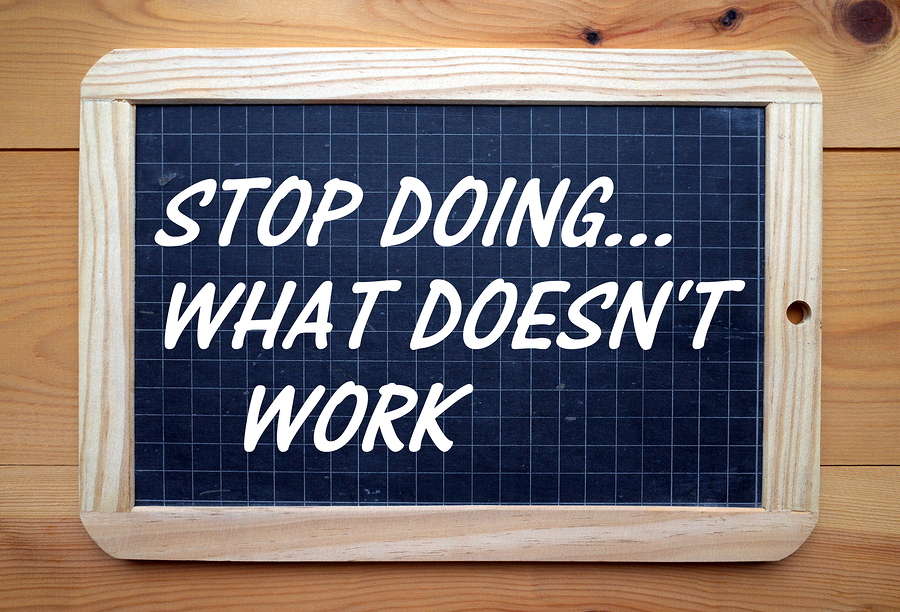
We all have the same 24 hours daily, yet some entrepreneurs seem to get more done and achieve better business results than others. If you feel like you’re stuck in a productivity rut, there’s one thing you can do to change: stop doing the things holding you back! Sounds simple, right? It’s often easier said than done, but not impossible, especially when the “pain of staying the same is greater than the pain of change,” says well-known author and speaker Tony Robbins. 

business results

Here are 5 of the most common result killers—and how to avoid them.

#1: Not Having a Plan

Lewis Carroll, the author of the beloved children’s book, Alice in Wonderland, was a modern-day entrepreneur when he penned, “If you don’t know where you’re going, any road will take you there.” Isn’t that the truth? But, unfortunately, regardless of longevity in business or the size of our organization, as true innovators and entrepreneurs, we still become captivated – and utterly distracted and pulled off course –  by “shiny objects.”

Using a growth plan is the first step to being focused and achieving better business results. What do you want to achieve in the next 3-5 years of your business? What actions are needed to achieve those goals? Then, knowing several approaches are available, you can select the most precise course to achieve your vision. 

Break down your big-picture goals into small, actionable steps — micro-movements, if you will — that are easily completed daily or weekly. Then, calendar your tasks into your schedule and stick to it! (BTW, adding days and times for task implementation into your calendar is a game changer if you want to avoid over-commitment.) 

And stay focused on the next 12 – 18 months! With a tighter time frame, you’ll find it much easier to stay on track. 

#2: Doing Too Much at Once

Remember when multitasking was a “thing?” Remember how excited we were to find that sought-after skill on a resume? Well, as my young godchildren remind me, ‘that was soooooo yesterday.’

At the time, and even in some minds of today’s entrepreneurs, multitasking still seems like an efficient way to get things done, but the opposite is true. A recent study at the University of Southern California (USC) illuminated many pitfalls stemming from multitasking, such as reduced IQ, low information retention, more mistakes, and brain drain. 

Instead of trying to do ten things at once, focus on one thing at a time and give it your full attention for a designated period. You’ll be surprised at how much more productive you are—and how much better the business results you’ll achieve.

Easier said than done but not impossible, especially when you want to feel more energized, be more productive, and achieve better results.

#3: Digital Distractions

My husband is a user of multiple digital devices — all simultaneously! For example, he watches TV in front of his iPad while responding to texts on his phone. Sound familiar? (Don’t get me started on his digital footprint during football season!) 

In our hyper-connected world, it’s easy to get distracted by technology. Every time a new email pops into our inbox or a notification pings on our phone, it’s tempting to stop what we’re doing and check it out—but resist the urge! Instead, turn off notifications.  Put your phone away so you can focus on the task at hand. You’ll be able to get more done in less time and without distractions. Trust me! I’m living proof it works.

Neuroscience is studying the impact of digital distractions on the brain. Besides interrupting the current task flow, digital distractions elevate one’s anxiety level. Plus, it comes with a high price tag. 

The Information Overload Research Group, a nonprofit consortium of business professionals, researchers, and consultants, reports that knowledge workers in the United States waste 25% of their time dealing with their huge and growing data streams, costing the economy $997 billion annually. Conquering Digital Distraction

The solution? Give yourself a pre-set amount of time to indulge in emails, text messages, social media, or whatever you decide, then turn off notifications and close programs for a focused amount of time (Nathaniel Kleitman recommends 90 minutes of focused time.)

#4: Procrastination 

We all dread specific tasks, but putting them off makes them worse.

Some experts recommend asking yourself “why” if you’re putting off a difficult or unpleasant task, but I find that approach is like a dog chasing its tail.  Asking “why” pulls us into a never-ending circle from which there is no escape.

A better starter word is “what.” For example, you can ask yourself, “what part of this project do I want to tackle first? What makes the most sense to address? What time frame am I willing to dedicate to it today?”

 ‘What’ questions move you to action. And once you finally tackle that arduous task, you’ll feel incredible relief and accomplishment and can move on to achieving results!

#5: Perfectionism

Egads! Perfectionism is a major productivity killer – not to mention a source of burnout and overwhelm.  Focusing on making everything perfect makes it easy to lose sight of the big picture. 

Instead of striving for perfection, aim for progress. Again, think micro-movement. What matters most is that you’re progressing toward your goal.  

Perfectionism is often about the expectations we set for ourselves and others — or the expectations we think others have of us, like our clients. If your perfectionism arises from what you think your clients expect from you, ask them. Like me, you may be shocked and surprised by what you hear. 

The Last Word

If you want to secure better results, stop doing the things that interrupt your performance. 

However, recognizing that these five common results killers decelerate your business growth,  you’ll find the inspiration and motivation to move past the productivity slayers to get more done and be on the path to better results. 

Core Business Assessment

Testimonial

Brooke Billingsley

Vice President
Perception Strategies

Synnovatia is a strategic coaching firm that is detailed and knowledgeable about business. i have a small business that grew from $150K to $750K because of the goal setting and resources that Synnovatia provided. It saves me years of learning on my own.

Search The Blog